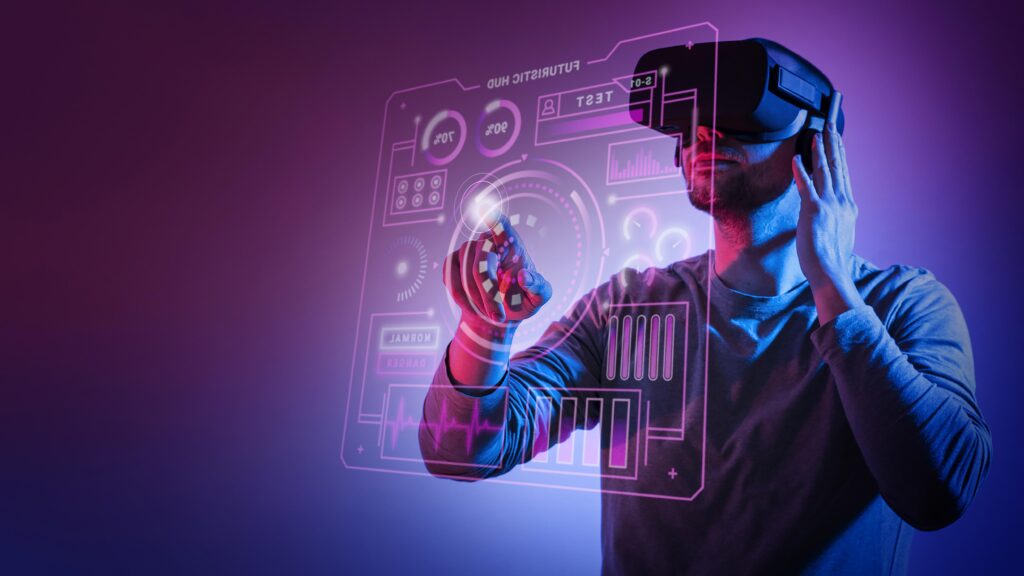
The Future of VR and Extended Realities

The future of Virtual Reality (VR) and other extended realities like Augmented Reality (AR) and Mixed Reality (MR) continues to be a subject of significant debate among tech innovators, business leaders, and everyday users.
On one side of the argument, companies like Meta, formerly known as Facebook, envision VR and other extended realities as components of the web’s future which will transform how we interact, work, and play online.
On the other side, critics argue that these technologies remain expensive, exclusive, and, to some extent, mere toys for a niche audience.
The article “xR, AR, VR, MR: What’s the Difference in Reality?” by Arm effectively differentiates between XR, VR, and MR by focusing on their purposes, underlying technologies, and the kinds of experiences they offer.
Specifically, Arm explains Extended Reality (XR), Virtual Reality (VR), and Mixed Reality (MR) as follows:
Extended Reality (XR)
Extended Reality (XR) is a ‘catch-all’ term for technologies that enhance or replace our view of the world. This is often through overlaying or immersing computer text and graphics into real-world and virtual environments, or even a combination of both.
Role in the Metaverse: XR is portrayed as crucial for the development of the metaverse, described as the next evolution of the Internet that merges real, digital, and virtual worlds into unified, new realities. The metaverse is accessed through devices like VR headsets and AR glasses, with XR technologies playing a foundational role.
Augmented Reality (AR)
Enhancement of Reality: AR is described as technology that enhances our real-world view by overlaying digital information directly onto our surroundings. This enhancement can be experienced through smartphones or more immersive AR smart glasses.
Technological Needs and Developments: For AR, particularly in smart glasses, the focus is on integrating advanced processors and sensors within a comfortable, wearable format. The article by Arm emphasizes the importance of “intuitive navigation and context-sensitive displays, facilitated by advancements in tracking, depth perception, and other features”.
Virtual Reality (VR)
Immersive Digital Environments: VR is defined as a technology that replaces the user’s real-world environment with a completely digital one, immersing them in virtual experiences. This immersion can be for entertainment, such as games and virtual concerts, or practical applications like training and education.
Mixed Reality (MR)
Blend of Real and Virtual: MR is explained as a midpoint between AR and VR, where the real and virtual worlds merge. This allows for interactions between real-world and digital objects, enhancing real environments with virtual elements or vice versa.
In their SXSW 2023 review titled “The Wildest VR/AR Experiences From SXSW 2022”, Carlton & Dandurand shared what the future might hold for VR and AR technologies considering the innovative experiences people had.
“Bobby: Thomas Villepoux’s Jailbirds VR is an incredible animated story about two prisoners who are tormented by a cruel warden. Attendees at SXSW got to experience all three chapters of truly stellar storytelling using immersive technology.”
The article also mentions “Stay Alive, My Son,” a VR experience that tells a real-life story in a very personal way. According to the authors, this shows how VR could change how we learn about history or real-world events, making them more than just facts in a book, but something we can see and feel for ourselves.
While there is excitement about the technological advancements and creative possibilities of VR and AR as noted by Carlton & Dandurand’s SXSW review, there are concerns among experts about the broader implications of these technologies on society.
In a 2022 study by Pew Research Center titled “The Metaverse in 2040,” Kevin Werbach, professor at the University of Pennsylvania, expressed concern about the widespread adoption of the metaverse by 2040, suggesting that the promise of a fully immersive digital life might not materialize as expected.
“Virtual worlds and immersive online spaces will continue to develop in significance, but 500 million people won’t be living in ‘the metaverse’ in any more meaningful way in 2040 than 2022,” Werbach said.
Ethan Zuckerman, director of the Initiative on Digital Public Infrastructure, questions the desirability of the metaverse and emphasizes the potential misalignment with mainstream user preferences.
“But does anyone really want VR to be the future? Those of us who’ve been down this road before remember Second Life… That community never achieved mainstream success” Zuckerman said.
Considering the different perspectives above, I personally think the future of VR and other extended realities lies in their thoughtful integration into society. Thus, by focusing on enhancing human experiences and solving real-world problems rather than merely serving as escapes from reality.
This requires a collaborative effort among technologists, policymakers, educators, and communities to ensure these technologies are accessible, equitable, and beneficial to all segments of the society.
It also means fostering digital literacy and ethics as core components of education to prepare individuals to navigate and shape the digital landscapes of the future responsibly. This is because, there is great potential for misuse and implications for mental health, data privacy and security.
Honda XR Mobility Robot Experience showcase at SXSW 2024. Video courtesy of Alexander Tawiah
Video Player
00:00
00:25
- None
- English
VR and Extended Realities Roles in Everyday and Professional Lives
The experiences highlighted at SXSW 2023 & 2024, with their deep narrative engagement and innovative audience participation, suggest a future where VR and AR could play significant roles in our daily and professional lives, extending beyond mere entertainment into education, healthcare, and perhaps even social interaction.
However, as noted in “The Metaverse in 2040” article by Pew Research Center, achieving this potential will require addressing the ethical, societal, and accessibility challenges that come with these technologies.
Now, while the future of VR, AR, and the broader metaverse is uncertain, the exploration and experimentation showcased at events like SXSW 2023 & 2024 provide an insight into the transformative potential of these technologies.
However, balancing this potential with mindful consideration of the concerns raised by experts will be crucial in navigating the path toward a future where immersive technologies enrich rather than complicate our lives.