How Digital Media Has Changed Music and Gaming
Digital media has shaped both the music and gaming industries and ushered in new ways of consumption, creation, and interaction.
In his contemporary music review titled “Internet Music: An Introduction,” Andrew Hugill discusses how digital media has transformed the music industry. According to Hugill, the internet has extended the level of music beyond just a medium for distribution to become an integral part of the music creation and consumption process.
“The internet is not just a distribution channel…it is a musical instrument in its own right” (Hugill, 2005).
This perspective from Hugill highlights how digital media has democratized music production and distribution, enabling artists to interact directly with their audience without the traditional barriers posed by physical distribution and record labels.
Hugill further explores the concept of Internet music as encompassing a broad range of activities that include the creation, performance, and sharing of music online.
He identifies various categories of Internet music, including collaborative compositions performed in virtual spaces, music that incorporates data from the network itself, and interactive web-based compositions.
This broadening of what constitutes music in the digital age shows the transformative impact of the internet, thus blurring the lines between creator and consumer, and opening up new possibilities for musical expression and engagement.
An interesting example of this internet music is evident during the Covid-19 pandemic. Ghana’s top rapper, Sarkodie, was unable to host his annual Black Love concert in person due to lockdowns and pandemic restrictions. However, with the support of digital media, he collaborated with a virtual reality company called Ceek to organize a virtual concert. This virtual event took the nation by surprise and a large number of his fans flocked online to watch his live performance. See snippet below;
Today, with the rise of digital media, artists can now produce music and directly connect with global audiences without necessarily relying on a record label for distribution.
Similarly, the gaming industry has witnessed transformative changes, fueled by technological advancements and evolving consumer preferences.
In the article “Tech Effects: How Video Games Impact You” by Wired, it discusses how video games, particularly action games, have been linked to positive effects on perceptual and cognitive skills.
This includes improvements in reaction times, attention span, spatial cognition, and the ability to multitask. These benefits demonstrate how digital media, through video games, can enhance brain function beyond mere entertainment.
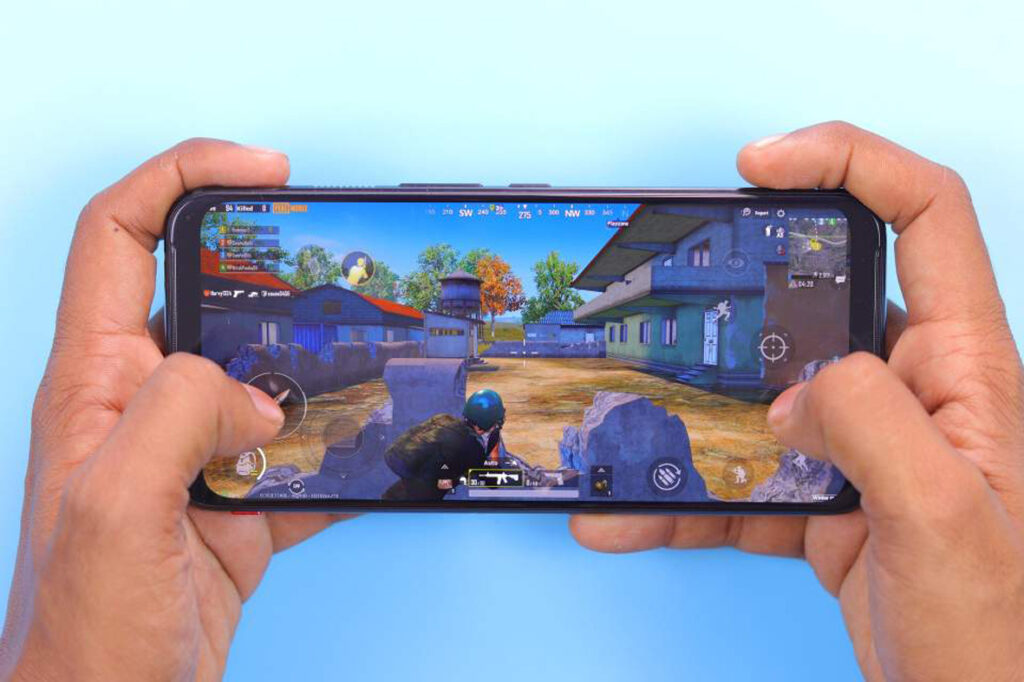
Also, digital media has expanded the accessibility and reach of video games. Thus, it has allowed players to engage with games across various devices and platforms. The rise of smartphones and free-to-play games like Fortnite has made gaming more accessible than ever by reaching a wider audience and increasing the total time spent gaming globally.
The article by Wired further discusses the potential of video games for social connection and therapeutic purposes. Thus, games designed for specific cognitive improvements, such as those being researched at UCSF’s Neuroscape Lab, showcase the therapeutic potential of gaming in addressing conditions like attention-deficit/hyperactivity disorder (ADHD).
Furthermore, the social aspects of gaming, including online multiplayer and community-building features shows how digital media fosters social interaction and collaboration among players.
Looking towards the future, both industries seem poised for continued innovation and growth. The music industry, as detailed in “Social Media’s Critical Role in the Music Industry,” by Musicians’ Institute has embraced social media platforms for artist promotion, fan engagement, and content distribution.
This trend is likely to evolve with emergence of artificial intelligence (AI) and other technologies, potentially integrating immersive experiences through virtual reality (VR) and augmented reality (AR) to offer more engaging and interactive fan experiences.
Similarly, the gaming industry, influenced by the rise of esports and mobile gaming, as noted by Pollack & Pierre-Louis (2019) is set to further blur the lines between physical and digital world by creating new opportunities for community building and interactive storytelling.
The Potential of Using Games in Journalism and Other Industries
Klaus Meier’s “Journalism meets games: Newsgames as a new digital genre. Theory, boundaries, utilization” article provides insight into how games can transform journalism. Newsgames, a blend of news and gameplay, enable audiences to explore complex issues interactively.
Meier suggests that Newsgames can deepen understanding of current events and social issues by immersing players in scenarios that require them to make decisions based on real-world data.
This interactive form of journalism has the potential to engage audiences more deeply than traditional news formats by making complex information more accessible and understandable.
For example, a game could teach you about climate change by letting you try to save the world from it. This approach can make learning or getting news more engaging.
In terms of education and learning, by incorporating game mechanics into learning environments, educators can enhance student engagement and motivation. The interactive and competitive elements of games can make learning more appealing and memorable.
For healthcare, the study by Johannes et al. (2021) suggests that gameplay can have a positive relation to affective well-being.
According to their study “Video game play is positively correlated with well-being,” games designed with specific therapeutic objectives can provide patients with engaging ways to manage their conditions, improve cognitive functions, and even support physical recovery.
This finding opens up possibilities for using games as therapeutic tools to address mental health issues, cognitive impairments, and physical rehabilitation.
Organizations could use games to get people interested in what they’re doing. They could create challenges that teach you about their work or give out rewards for learning new things. This could make more people want to get involved or learn more about important topics.
Final Thoughts
Digital media has definitely changed music and gaming considering the discussion above. But it looks like it’s just the beginning. With the evolution of AI and other emerging technologies, we could expect more advanced and immersive ways of listening to music or playing games. There could also be a potential for using games for more than just entertainment, like learning about the real-world or solving life problems. It’s an exciting time for both music lovers and gamers. The future looks interesting.
A wonderful serenity has taken possession of my entire soul, like these sweet mornings of spring which I enjoy with my whole heart. I am alone, and feel the charm of existence in this spot, which was created for the bliss of souls like mine. I am so happy.
my dear friend, so absorbed in the exquisite sense of mere tranquil existence, that I neglect my talents.
I feel that I never was a greater artist than now. When, while the lovely valley teems with vapour around me, and the meridian sun strikes the upper surface of the impenetrable foliage of my trees, and but a few stray gleams steal into the inner sanctuary.